The Danger of Emotional Fragility
To Eggshell or Not to Eggshell?
Some people experience the world as a threat. They filter everything through insecurity. Every word, every joke, every bit of feedback runs through one question to them : Am I good enough?
And no matter what you say, the answer they hear is no.
You can speak gently. You can reassure them. You can apologize when nothing was wrong, and they will still twist it into proof that you meant harm. It’s exhausting.
You try to share your heart, they feel attacked. You try to explain, they get more defensive. Soon you’re walking on eggshells, whispering around someone’s shame, slowly disappearing in the name of someone else’s comfort.
I used to think walking on eggshells was kindness. That if I could say things the right way, more carefully, I could keep the peace or help them see me. That if I adjusted enough, explained enough, reassured enough, I could fix them. Allow them to feel safe.
But you can’t make someone feel safe inside themselves , when it isn’t safe inside themselves. You can’t calm a war they keep feeding with insecurity and defensiveness. You can only exhaust yourself trying.
Because when someone is emotionally fragile, accountability feels like an attack.
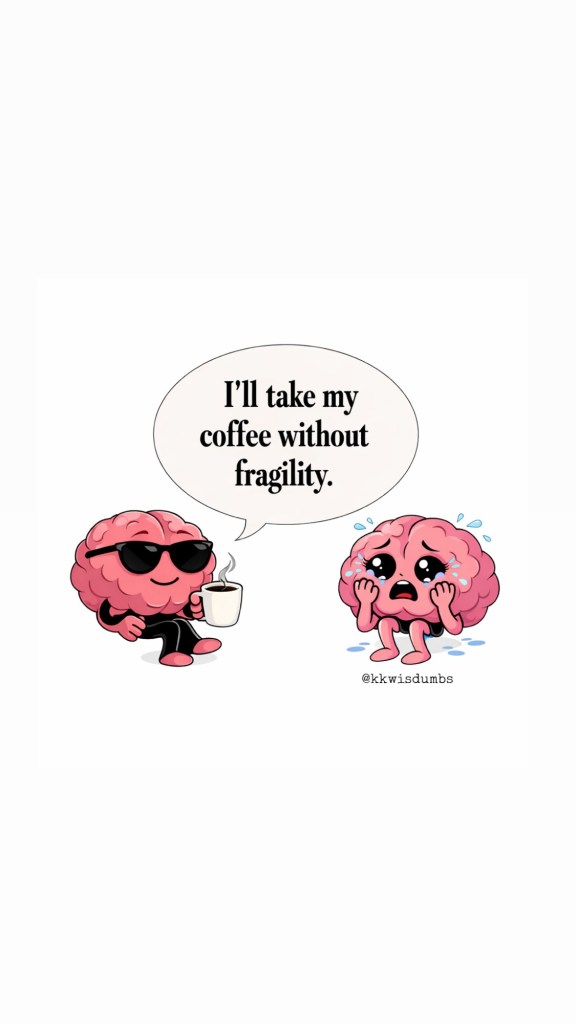
Emotional fragility is what happens when a nervous system can’t tolerate discomfort without turning it into threat. When feedback feels like rejection. When conflict or being challenged feels like shame.
It isn’t weakness. It’s a survival response shaped in environments where emotions weren’t safe, where love was conditional, where mistakes were punished, and where being fully seen led to withdrawal, ridicule, or loss.
So the nervous system learned to stay alert, guarded, defensive, or quiet. Over time, everything starts to feel personal. Neutral moments feel charged. Honest conversations feel dangerous. And responsibility feels unbearable because it threatens the fragile sense of self holding everything together.
So instead of learning regulation, they learn protection. Instead of learning accountability, they learn avoidance. Instead of learning how to stay present through discomfort, they learn how to escape it, often through fantasy.
Fantasy feels safer than reality. Reality asks for self reflection. Fantasy asks for belief in a distortion or distraction. They become attached to who they could be and terrified of who they are.
They live as fantasy addicts, hooked on potential, promises, and future versions of themselves. Accountability threatens the fantasy. It brings things back to the present, to truth, and they are deeply resistant to that.
Anyone who tries to ground them in reality becomes the problem, the threat.
They think they’ve taught you to be careful. You think you’ve learned to be easygoing and agreeable. But really, you’ve been taught to abandon yourself.
Because you cannot build emotional safety with someone who is at war with themselves. Their insecurity will always turn you into the enemy. You can’t love them enough. You can’t be perfect enough. You can’t tiptoe or give enough.
At some point, it stops being about them. It becomes about what happens to you when you keep editing yourself to protect someone else’s fragility.
When you’re constantly adjusting your words, your tone, your truth, not because you’re unclear, but because you’re afraid of how it will be received. When there is no self-reflection on their end, you become the one doing all the changing just to keep the peace.
You start thinking more about how something will land than whether it’s actually true. You start prioritizing someone else’s comfort over your own clarity and self respect.
And that’s the quiet danger. Not conflict. Not offense. But the slow erasing of your voice.
Because living in truth requires friction. And when you organize your life around avoiding it, you don’t create peace, you create silence.
At some point, you realize
it’s not your job to be easier to handle.
It’s your job to be honest. And if someone can’t meet you there,
that’s not a communication issue.
That’s a capacity issue.
— KKWisdumbs
 KK WISDUMBS
Leave a comment